

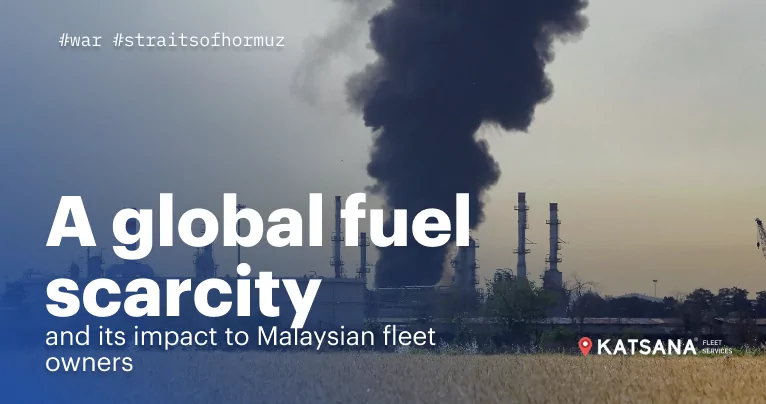
For Malaysian fleet operators, the Iran conflict is not some distant geopolitical issue. This war is a direct operational threat affecting fuel costs, cross-border logistics and supply chain stability.
Our beloved country is a trade-dependent economy. We are highly exposed to disruptions in global energy flows and shipping routes. The knock-on effects are already being felt across logistics, constructions, FMCG distributions, and public sector fleets.
We are writing this guide to break down the Malaysia-specific short-term and medium-term impacts, and how fleet operators can respond using the KATSANA fleet management solutions.
⚡ Short-Term Impact on Malaysian Fleet Operators (0–3 Months)
⛽ 1. Fuel Price Volatility & Diesel Subsidy Pressure
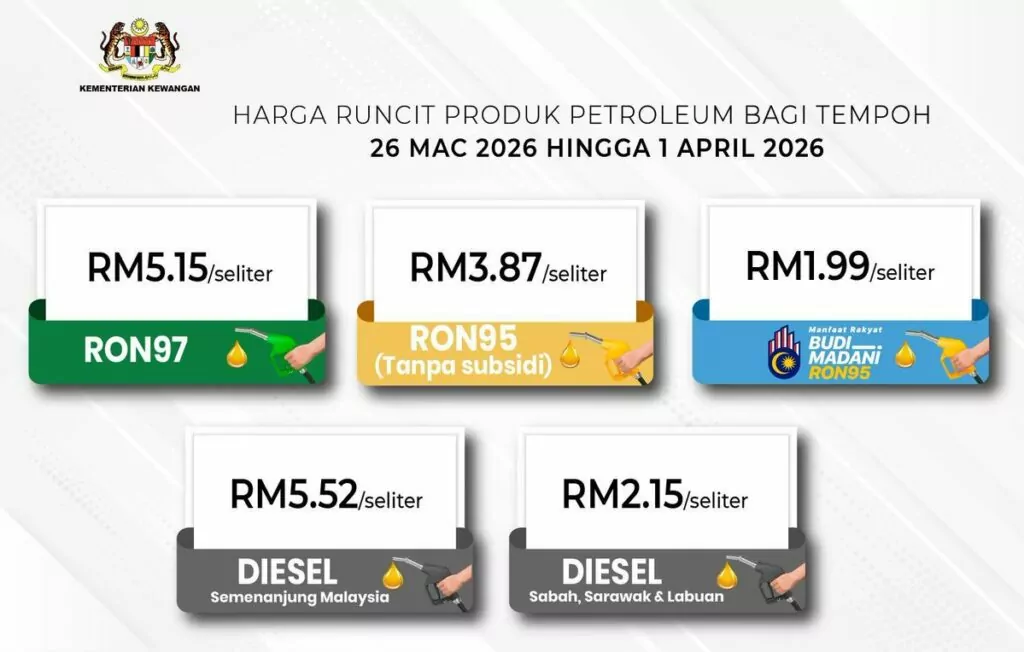
Malaysia’s fuel pricing is partially regulated, but global oil shocks still filter into the system quickly, especially with on-going diesel subsidy rationalization.
Here are the key take aways for fleet operators:
- Subsidy adjustments may accelerate
As global crude prices rise, the government may reduce blanket subsidies or tighten eligibility criteria. Fleet operators (especially in logistics and construction) could see sudden increases in diesel costs. - Cash flow strain from weekly price adjustments
Even controlled pricing mechanism (like the Automatic Pricing Mechanism, APM) can result in frequent fluctuations, making budgeting difficult for SMEs. - Higher exposure for non-subsidised fleets
Commercial fleets not eligible for subsidies (or operating across borders) will face full market price volatility, directly impacting margins.
✅ Mitigation plan: Use the KATSANA Fuel Monitoring solution to track consumption, detect fuel thefts and irregularities to reduce wastage immediately.
🚚 2. Delivery Delays & Port Congestion Spillover
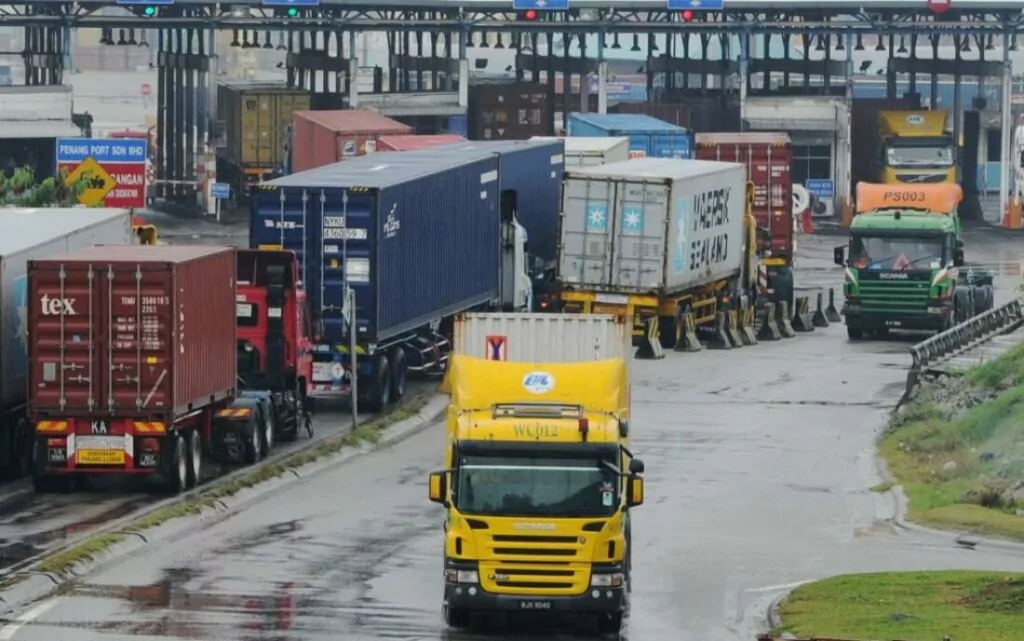
Malaysia’s ports (especially Port Klang and Port Tanjung Pelepas) are tightly linked to global shipping flows.
- Upstream shipping delays cascade into trucking delays
When vessels reroute or arrive late, trucks face longer waiting times at ports, reducing daily trip counts. - Increased turnaround time per job
A job that used to take 1 day may now take 1.5–2 days due to congestion and rescheduling. - Higher detention and demurrage charges
Delays in container pickup or return can result in additional fees, which often fall on logistics operators.
✅ Mitigation plan: Use KATSANA GPS Tracking for real-time coordination and dynamic rerouting.
📦 3. Supply Chain Uncertainty Across Key Industries
Industries heavily reliant on imports (like construction, manufacturing, and FMCG) are already feeling disruptions.
- Erratic dispatch schedules from clients
Factories facing raw material shortages will issue last-minute delivery requests or cancellations, making planning difficult. - Underutilised fleets during demand dips
When production slows, fleet operators may experience idle vehicles and reduced revenue per asset. - Overutilisation spikes during catch-up periods
Once supply resumes, fleets may be pushed to operate beyond optimal capacity, increasing wear and tear.
✅ Mitigation plan: Use KATSANA Fleet Management Platform to monitor utilisation trends and rebalance fleet deployment.
🛡️ 4. Rising Insurance, Security & Operational Risk

Economic and geopolitical instability tends to increase operational risks.
- Cargo theft risk increases during disruption
Delays, congestion, and route changes create more opportunities for theft or pilferage. - Insurance premiums may rise
Insurers may reprice risk due to increased uncertainty, especially for high-value or cross-border cargo. - Driver fatigue and safety risks
Longer routes and delays can lead to fatigued drivers, increasing accident probability.
✅ Mitigation plan: Use KATSANA MDVR & Driver Behavior Monitoring to improve safety and reduce risk exposure.
🧭 Medium-Term Impact on Malaysian Fleet Operators (3–12 Months)
⛽ 1. Structural Increase in Diesel Costs
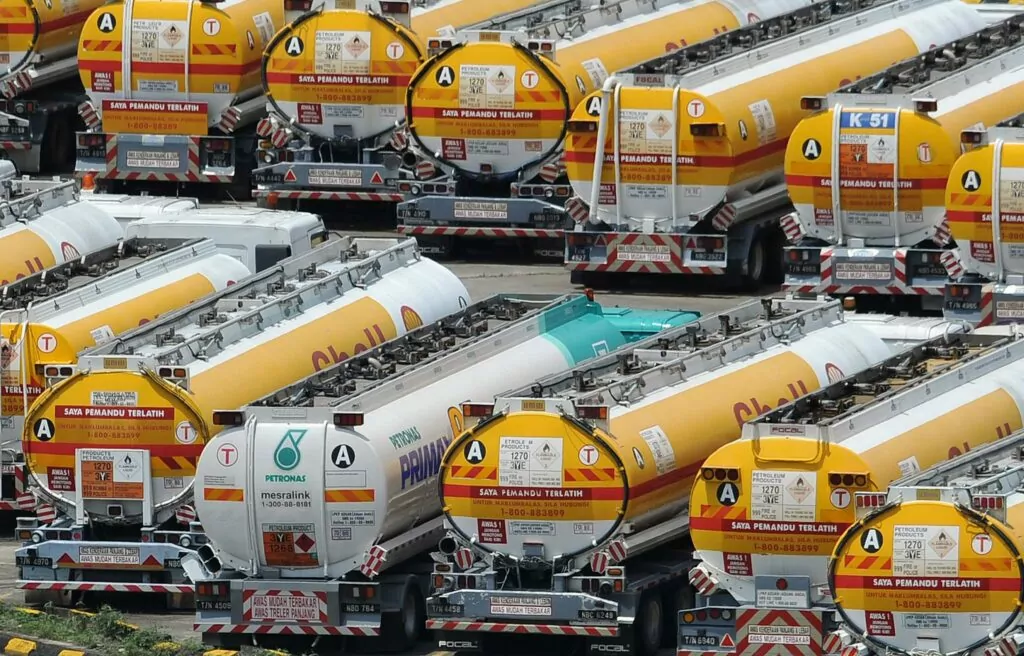
Even if the conflict stabilises, energy markets rarely return to previous norms quickly.
- Higher baseline fuel prices
Fleet operators should expect permanently elevated diesel costs, even after volatility subsides. - Reduced government subsidy coverage
Malaysia may continue shifting toward targeted subsidies, leaving more fleets exposed to market rates. - Pressure on contract pricing
Long-term logistics contracts may become unprofitable if fuel clauses are not adjusted.
💯 Strategy: Adopt fuel efficiency programs powered by data generated from KATSANA Fuel Monitoring solution.
🌏 2. Shift in Regional Trade & Logistics Patterns
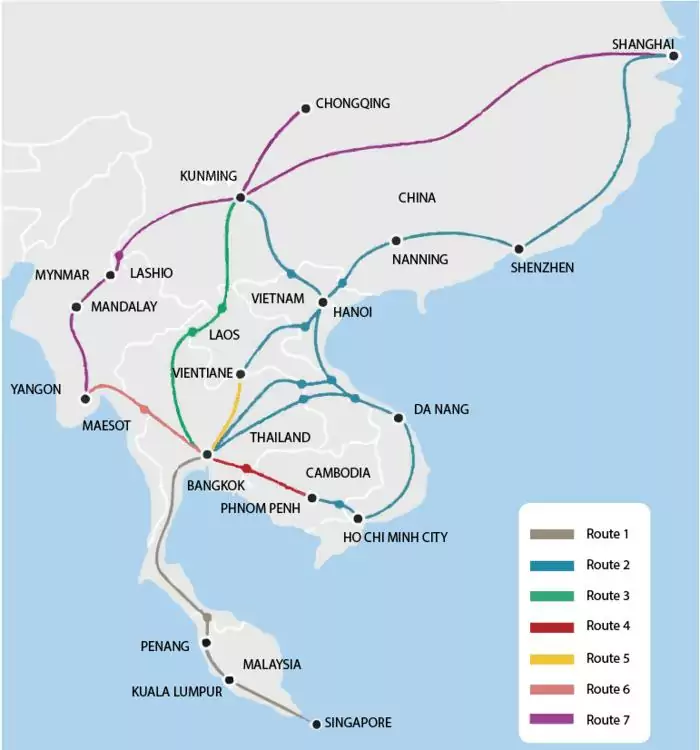
Global supply chains are reconfiguring—and Malaysia will be part of that shift.
- Increased intra-ASEAN trade flows
Companies may rely more on regional suppliers, increasing cross-border trucking demand (e.g., Malaysia–Thailand). - New logistics hubs and corridors
Ports and inland hubs may shift in importance, requiring fleets to adapt to new routes. - Greater complexity in operations
More cross-border compliance, documentation, and coordination will be needed.
💯 Strategy: Use fleet tracking & telematics to analyse route efficiency and adapt quickly.
📈 3. Higher Freight Rates Become the New Normal
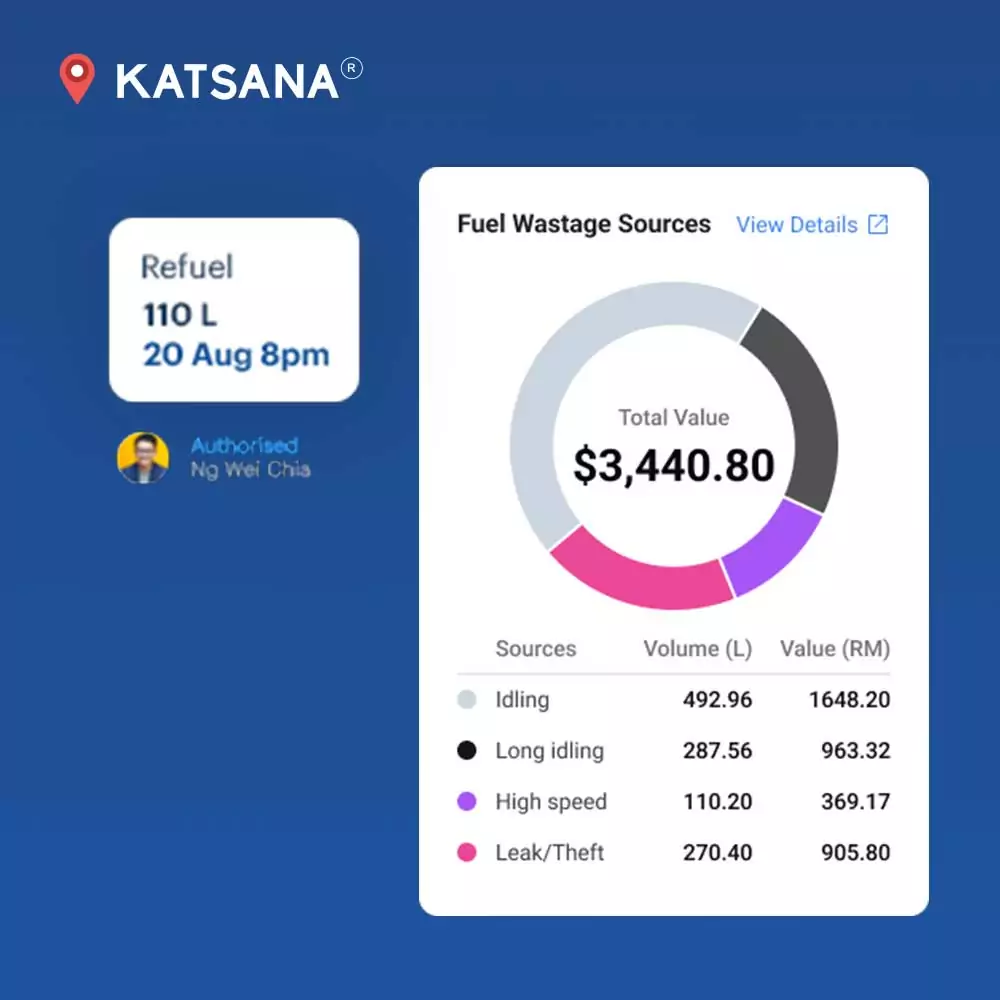
Cost increases are likely to persist across the logistics chain.
- Fuel surcharges become standard
Operators will need to formalise fuel adjustment mechanisms in contracts. - Customers push back on price increases
Competitive pressure may limit how much cost can be passed on. - Margin compression for inefficient operators
Fleets without optimisation tools will struggle to maintain profitability.
💯 Strategy: Use data to justify pricing and improve operational efficiency.
💻 4. Digitalisation & Telematics Adoption Accelerates

This crisis will accelerate a long-term trend: data-driven fleet management.
- Real-time visibility becomes essential
Operators need instant insights into vehicle location, fuel usage, and delays. - Data-driven decisions replace intuition
Fleet planning, maintenance, and routing will increasingly rely on analytics. - Competitive advantage shifts to digital players
Fleets using telematics will outperform those relying on manual processes.
💯 Enabler: KATSANA Fleet Platform
🛠️ Malaysia-Focused Action Plan for Fleet Operators
Short-Term (Act Now)
- Zero-Tolerance Idling Policy: Every minute of idling is literal money evaporating. Implement strict idling limits and use telematics to enforce them.
- Fuel Security: As fuel prices rise, so does fuel theft (both “siphoning” and “card-sharing”). Secure your assets with a robust fuel monitoring system.
- Route Consolidation: Stop running half-empty trucks. Use your data to consolidate deliveries and reduce total mileage immediately.
Medium-Term (Build Resilience)
- Reprice contracts with fuel clauses: Protect margins against volatility
- Right-Sizing the Fleet: Use historical data to identify underutilized assets. If a vehicle isn’t generating a clear ROI in this high-cost environment, sell it while the used-market prices remain elevated.
- Predictive Maintenance: Don’t wait for a breakdown. With parts in short supply, use fleet management software to catch minor issues before they become “grounding” events.
- Driver Coaching: High-speed driving and harsh braking can increase fuel consumption by up to 30%. Invest in driver behavior analysis to turn your team into “eco-warriors” on the road.
- Explore EV/hybrid adoption where viable: Especially for urban delivery fleets with consistent travel distances.
- Centralise operations with telematics: Create a command center for data-driven decision-making
📊 How Telematics Reduces the Severity
In 2026, data is an important buffer against cost uncertainty. A telematics-driven approach helps you fight back in three key ways:
- Fuel Transparency: By integrating fuel sensors with GPS data, you can spot discrepancies between fuel spent and miles driven in real-time.
- Optimized Dispatching: Real-time visibility allows you to reroute drivers around congestion or newly restricted zones, saving precious fuel and time.
- TCO (Total Cost of Ownership) Visibility: Telematics gives you a granular view of exactly how much the Iran conflict is costing your operation per mile, allowing you to adjust your pricing or surcharges with surgical precision.
The winners will be those who embrace visibility, efficiency, and data.
Telematics is no longer optional – it is the control layer that allows fleets to operate confidently in an unpredictable world.
The war in Iran has undeniably made fleet management harder, but it hasn’t made it impossible. By leveraging the right technology, you can turn a period of crisis into a period of unprecedented operational refinement.