

Agriculture remains a cornerstone of the Malaysian economy, contributing approximately 8% to the national GDP in 2024. Despite this significance, the sector has historically lagged behind in digital integration, remaining heavily reliant on physical machinery and manual field operations. To bridge this gap, SD Guthrie, one of the world’s leading producers of Certified Sustainable Palm Oil (CSPO), has partnered with KATSANA to initiate a comprehensive plantation digitalization program, beginning with the deployment of robust telematics and power solutions at their Carey Island operations.
The Fundamental Challenge: The Power Delivery Problem
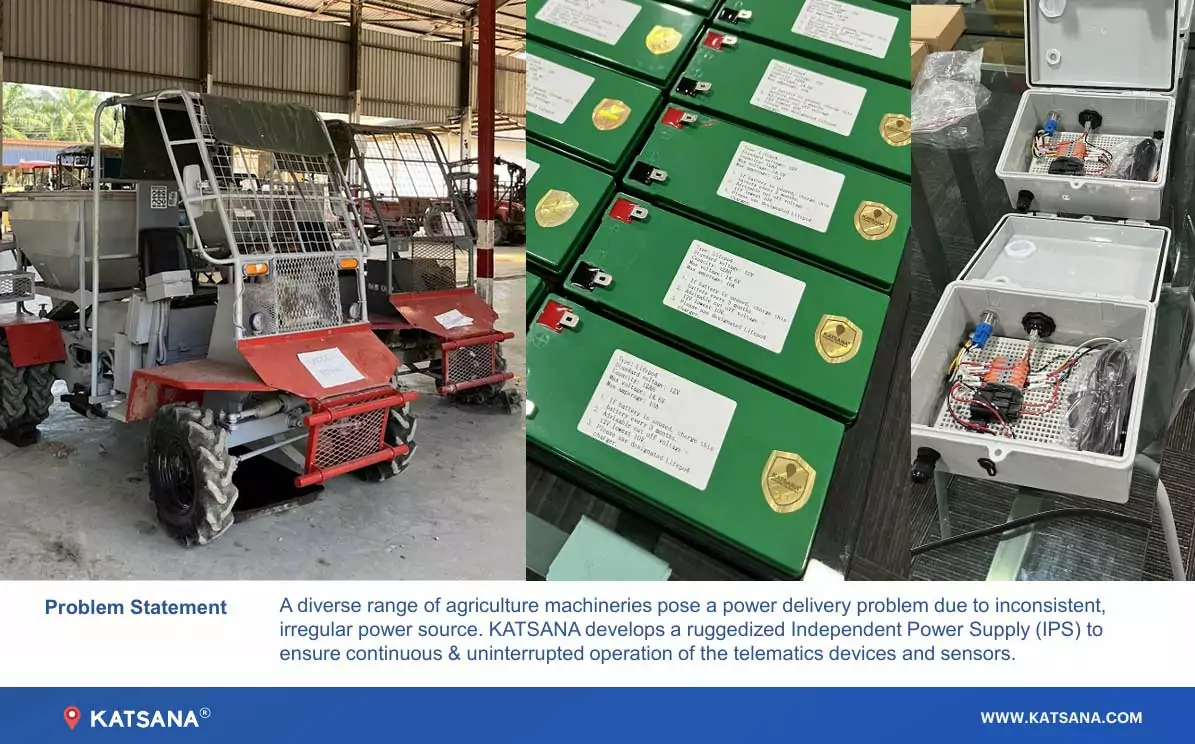
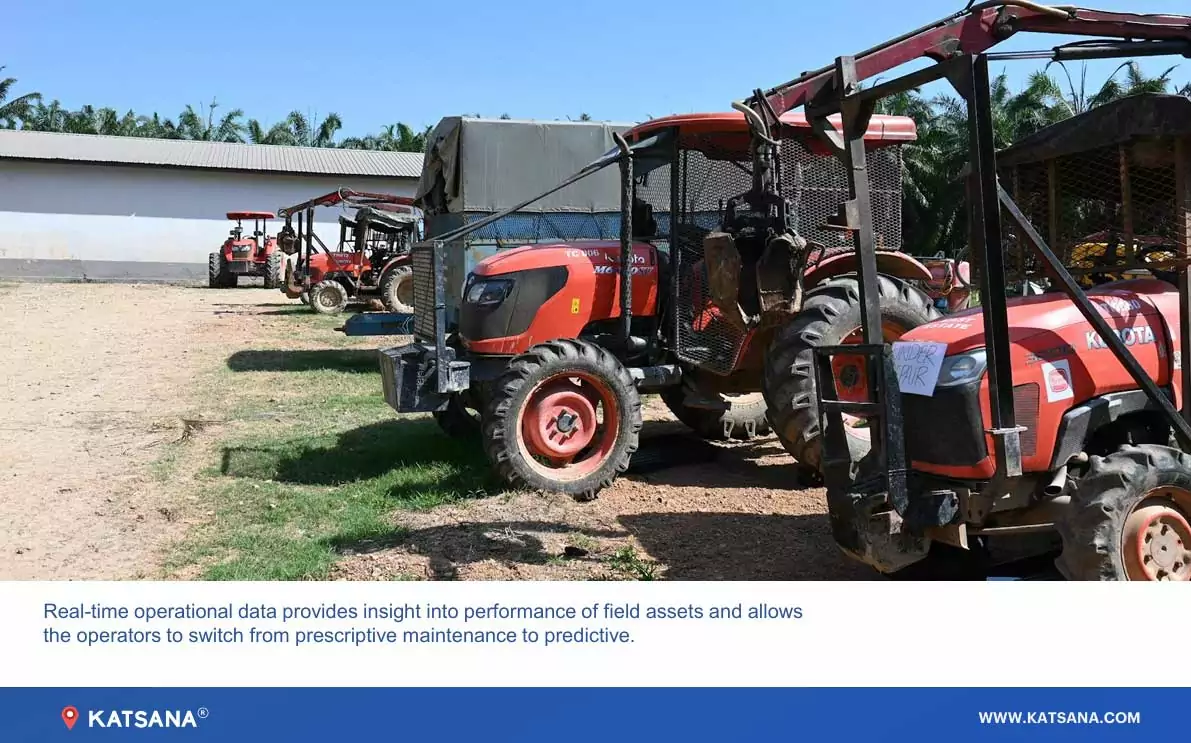
While mechanization using tractors, harvesters, and excavators is essential for large-scale farming, it introduces significant hurdles for digital tools. KATSANA identified that a primary barrier to entry for sensors, telematics, and tablets is the inconsistent and irregular power source provided by a diverse range of agricultural machinery.
- Inconsistent Power Sources: A diverse range of machinery including tractors (e.g., M6040S, M6040SU), harvesters, and transport vehicles often provide irregular and unreliable power, which can lead to data loss or device failure.
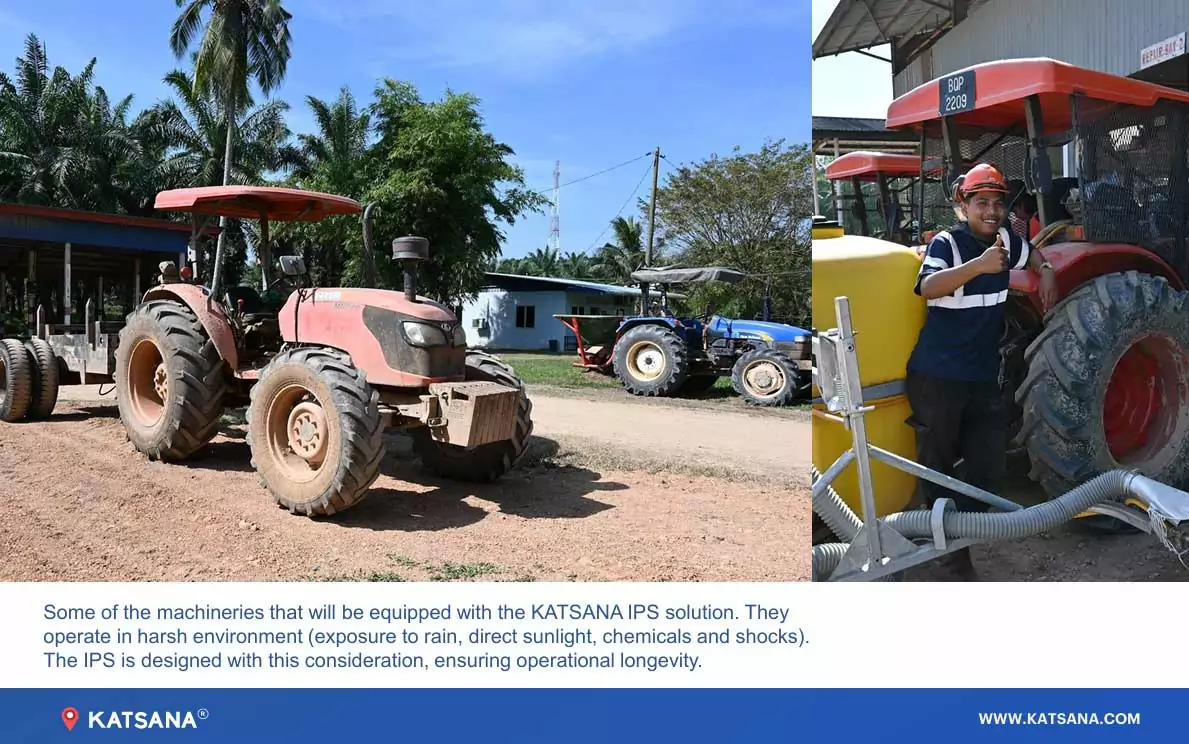
- Extreme Environmental Exposure: Machineries operate in harsh conditions, facing constant exposure to heavy rain, direct sunlight, corrosive chemicals, and physical shocks. Furthermore, they must withstand high-pressure water jets during daily cleanup operations.
Without a reliable power foundation, efforts to digitalize operations often falter as sensors and telematics devices require continuous uptime to provide actionable insights.

The Solution: KATSANA Independent Power Supply (IPS)
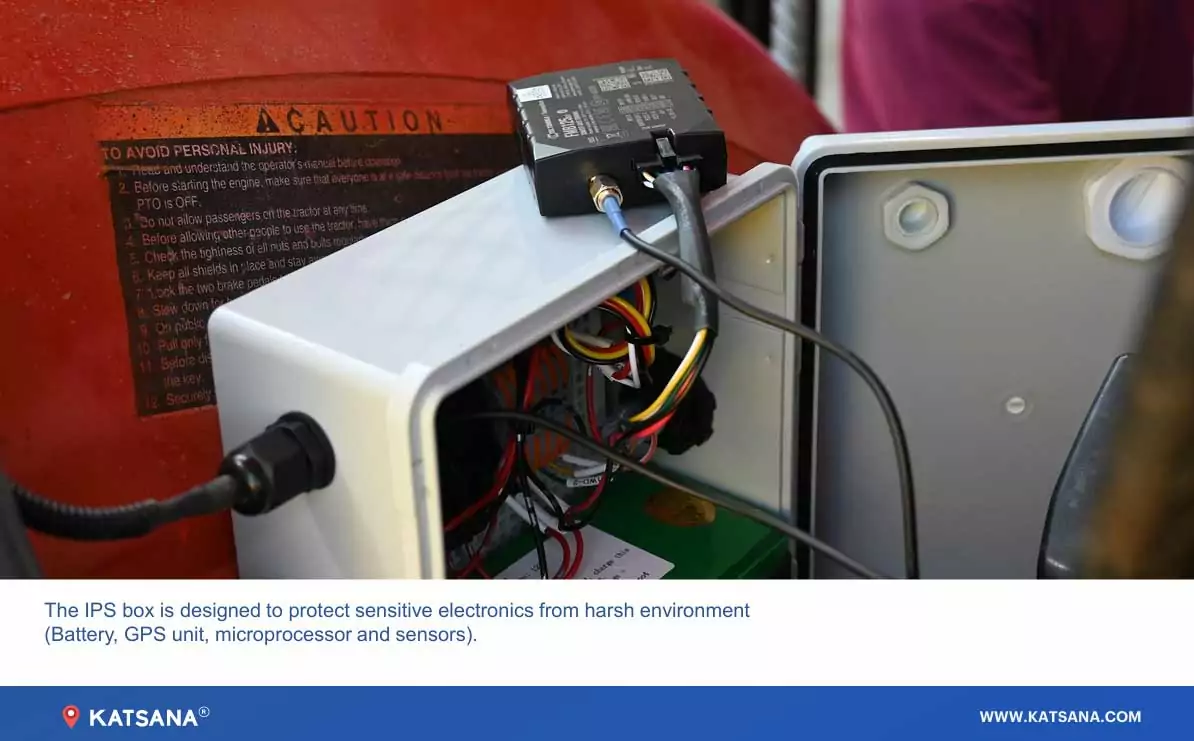
To ensure the continuous and uninterrupted operation of telematics devices, KATSANA developed a ruggedized, in-house designed Independent Power Supply (IPS). This modular system acts as a reliable power buffer, protecting sensitive electronics from the plantation’s volatility.
Technical Specification & Design
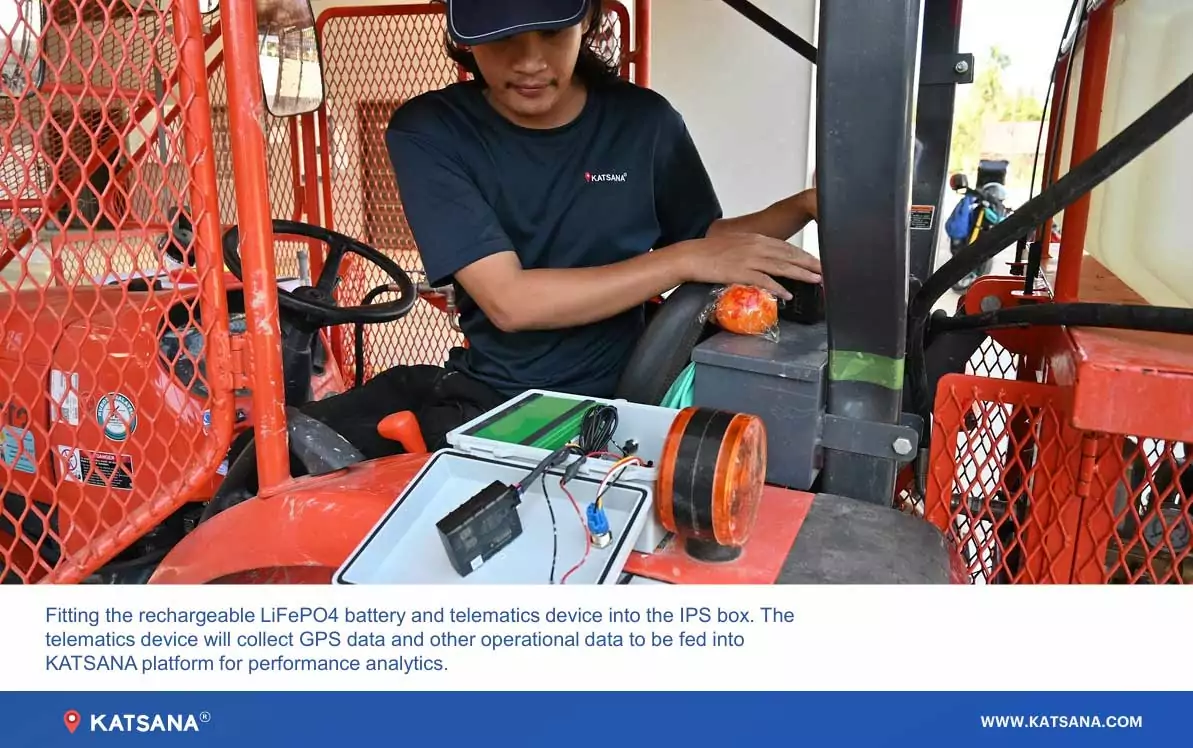
Battery Technology: The system utilizes a 12AH LiFePO4 (Lithium Iron Phosphate) rechargeable battery with a standard voltage of 12V (max 14.6V).
Modular Architecture: The IPS features a modular design that allows field operators to perform self-diagnostics and repairs, ensuring operational longevity in remote areas.
Monitoring: A built-in voltage indicator provides drivers and managers with clarity on the remaining useable battery level.
Deployment and Implementation
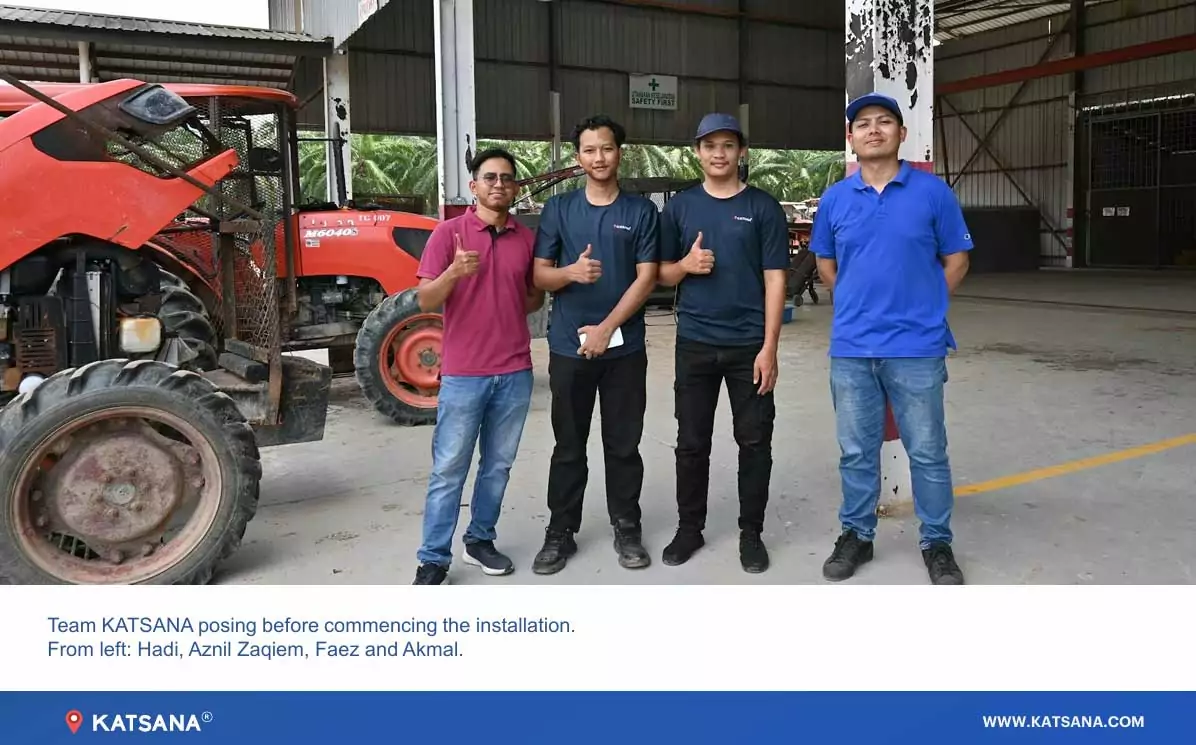
In February 2026, the KATSANA team commenced the installation of these units on SD Guthrie’s fleet, which includes machinery like the Kubota M6040S and New Holland tractors.
A Collaborative Engineering Approach
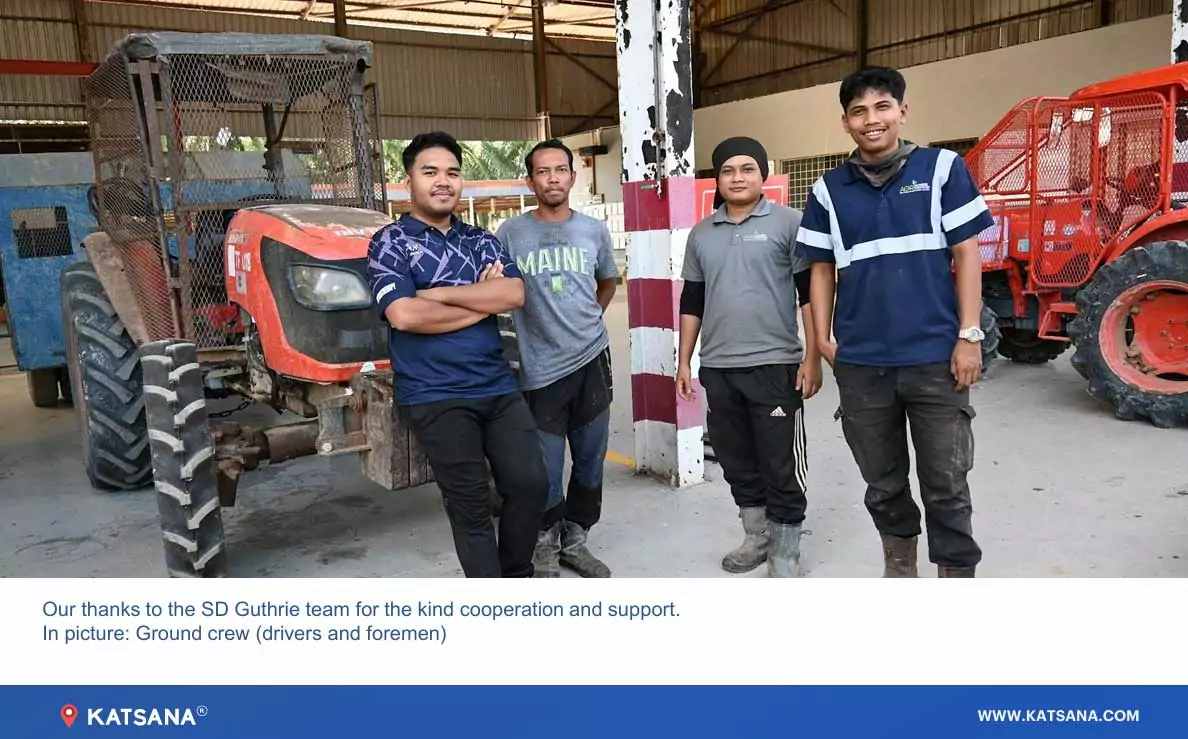
The deployment relied on close cooperation between KATSANA engineers and SD Guthrie’s ground personnel:
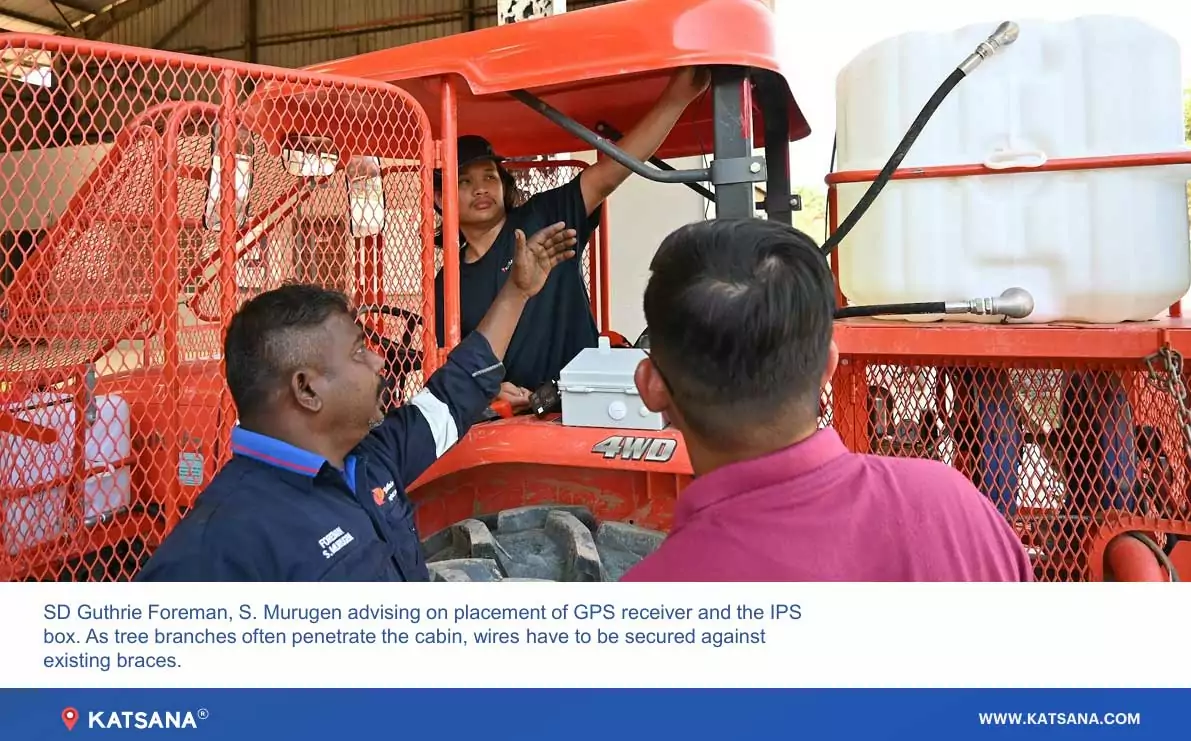
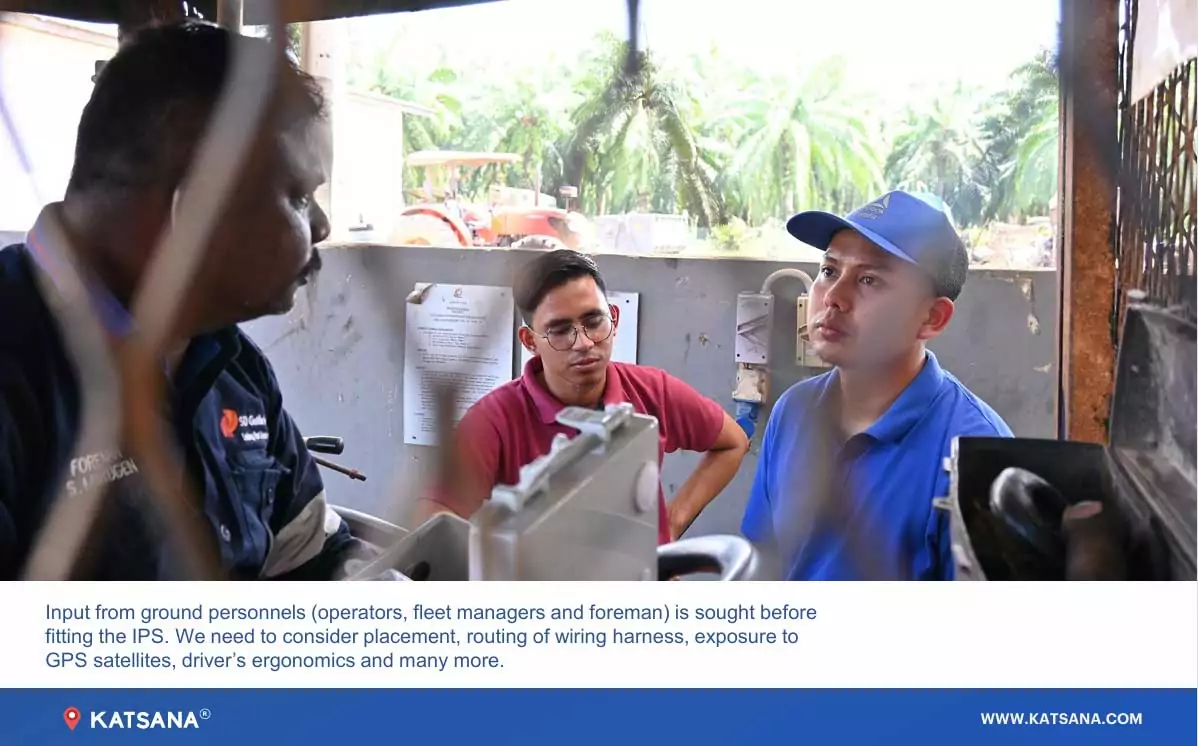
Field Consultation: Input was sought from operators and fleet managers to determine the best routing for wiring harnesses and placement for GPS satellite exposure.
Expert Guidance: SD Guthrie Foreman, S. Murugen, advised on securing wires against existing braces to prevent damage from tree branches.
Ergonomics and Durability: In compact cabins, the IPS was mounted on the wheel well ; in roomier models, it was installed directly next to the driver’s seat for easy access to the voltage indicator.
Standard Compliance: Hardware engineer Hadi performed final checks to ensure all installations met KATSANA’s fitment standards.
Outcome: Precise Field Performance Analytics
By solving the power delivery problem, SD Guthrie has unlocked the ability to collect real-time operational data. This data is fed into the KATSANA platform for advanced performance analytics.
The primary benefits include:
Continuous Data Stream: The IPS ensures the telematics devices collect uninterrupted GPS and operational data, which is fed into the KATSANA platform for performance analytics.
Predictive Insights: By analyzing this real-time data, operators can move away from prescriptive maintenance (fixed intervals) to predictive maintenance (based on actual machine health and performance), significantly improving the care of field assets.
Driver Empowerment: Training sessions led by KATSANA’s Project Manager ensured that drivers and ground crews understood how to use the IPS and manage its charging properties.

Conclusion
The partnership between SD Guthrie and KATSANA demonstrates that the first step toward agricultural digitalization is not the software itself, but the hardware infrastructure that supports it. By solving the power delivery problem with the IPS solution, SD Guthrie has secured the “uninterrupted operation of telematics devices,” paving the way for a more data-driven and sustainable future in plantation management.
For more information on KATSANA Smart Agriculture solutions, please refer to: